
A collection is shown once. The room it is shown in becomes part of the collection.
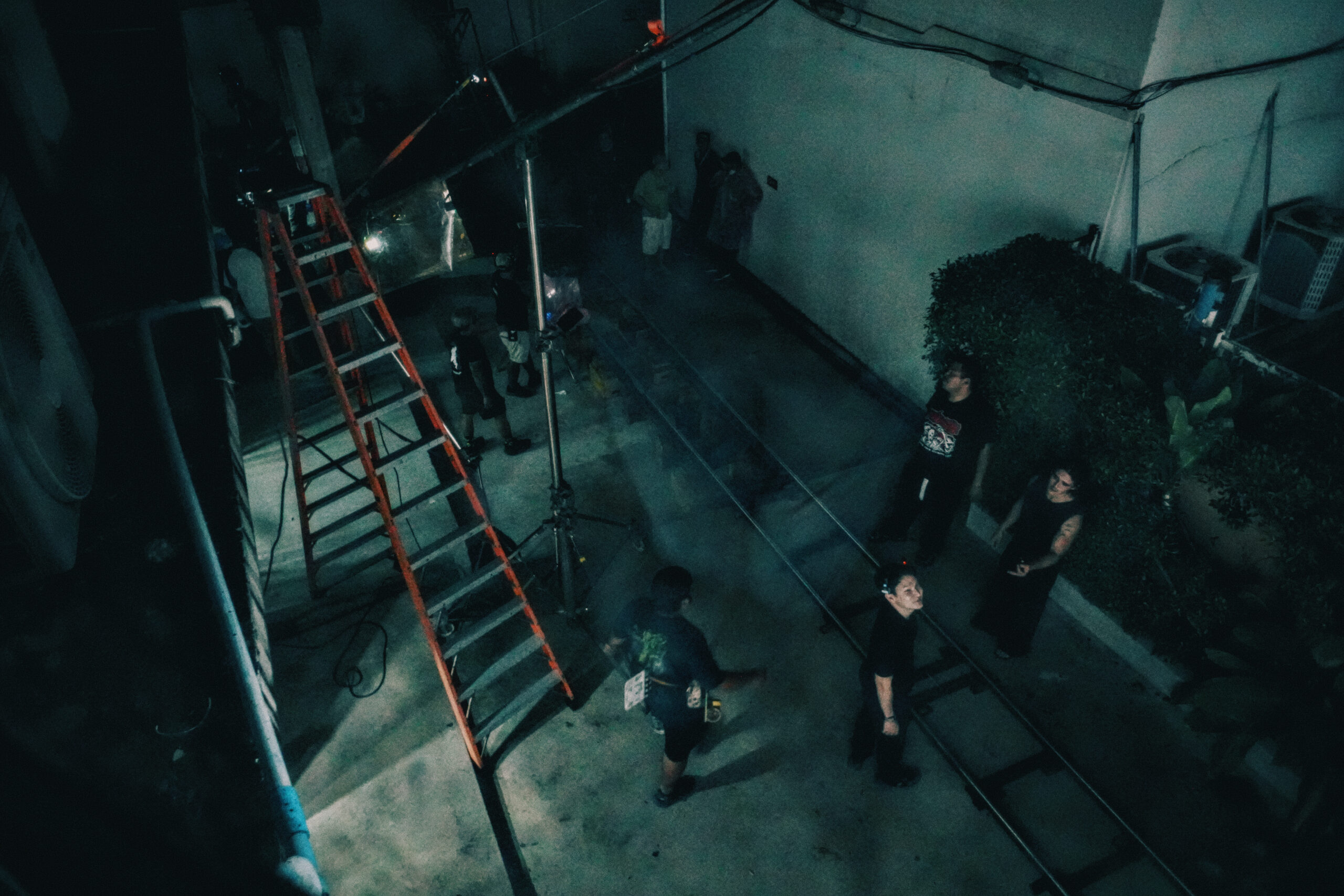
Search for a fashion show venue Bangkok designers can actually use and the results split into two piles. Hotel ballrooms, which will seat anyone and flatter nothing. And convention halls, built for trade fairs, where a collection has to compete with a ceiling grid and a carpet. Both will hold a runway. Neither will hold an idea.
Begrüntes Haus is the third option. Raw concrete, dark surfaces, grunge texture and considered light — a house, not a hall — on Sukhumvit Road in the Phra Khanong area, a short walk from BTS Phra Khanong, with dedicated on-site parking for up to 80 vehicles. For a show, that parking matters more than it sounds: rails arrive by van, press arrive with cases, and the get-in for a runway build does not start with an argument about where to unload.
What a fashion show venue in Bangkok has to survive
A show is fifteen minutes long and takes three days to build. Everything about the room is tested in that ratio. The load-in has to be wide enough for rails and flight cases. There has to be somewhere to hang forty looks and dress a cast without the backstage bleeding into the front of house. There has to be power where the lighting wants it, not where the building happened to put it. And when the doors open, the room has to stop looking like a build and start looking like a decision.
The visual test is the harder one. Most venues are neutral by intention, which sounds useful and is not. A neutral room gives a collection nothing to push against, so every effect has to be imported — drape, flooring, walls, a set that costs more than the clothes. Concrete does the opposite. It has a position already: hard, matte, unglamorous, and completely uninterested in competing with fabric. Against it, tailoring reads as tailoring and colour reads as colour.
Considered light is the second half of that argument. Installed lighting means the room arrives with direction, contrast and falloff in place. A runway lit from a grammar that already exists photographs differently to one lit from scratch under a hotel’s warm downlights — and since most people will see the show as a photograph or a fifteen-second clip, that difference is the show.
Who the space suits
The Haus is not a fashion week hall and does not pretend to be. It suits designers and houses who want the room to be legible in the pictures. A fashion show venue Bangkok labels come back to tends to serve briefs like these:
- Independent designers and emerging labels — a first or second show, where the budget goes into the clothes and the room has to carry the rest.
- Capsule and collaboration drops — short-format presentations tied to a release, run for press, buyers and a small invited audience.
- Presentation-format shows — static or moving presentations where guests circulate among the looks rather than sitting in rows.
- Streetwear and footwear releases — shows that behave more like a party than a runway, with a soundsystem and a late finish.
- Jewellery, eyewear and accessories — small objects that need close, controlled light and a dark room around them.
- Fashion school and graduate collections — group shows that need a real venue rather than a campus hall.
- Magazine and platform showcases — editorial-led evenings pairing several designers under one title.
Show season fills early and dates are held on a first-conversation basis. Inquire with your date range and the format you have in mind, and we will tell you honestly whether the Haus is the right room for it.
What the Haus holds
Specifics decide a show more than mood boards do. These are the details worth checking against any fashion show venue in Bangkok you are considering, and how the Haus answers them.
Roughly 150 considered guests
The Haus is intimate by design, and around 150 guests is where it sits best. For a show that is a real number rather than a limitation: two banks of seating along a walk, or a standing presentation with room to circulate, filled with press, buyers, stockists and the people who will actually write about the collection. A show attended by 150 of the right people travels further than one attended by 500 who came for the bar. If your list runs longer than the room, we will say so at the first conversation rather than the last.
A raw, open floor to build a runway into
The show floor is open and unfussy, which is what a runway build needs. Walks have been laid, seating banked, plinths set and structures rigged here. We will walk your production designer through what the building supports, where power sits, what the ceiling will take, and how the get-in and get-out should be sequenced so the build has room to breathe and the strike does not run into the next booking.
Backstage that stays backstage
Dressing a cast is the part of a show that most rooms handle badly. The Haus has areas that can be given over to rails, mirrors, hair and make-up stations and a dresser’s run, kept separate from the guest route so the front of house never sees the machinery. Layouts are scoped per show, because a twelve-look presentation and a forty-look runway are not the same problem.
Installed lighting as a starting point
Lighting is installed in the space, so you begin with contrast and direction rather than an empty rig. Most shows bring a lighting designer and add fixtures for the walk itself; the base means less time spent building an atmosphere from zero and more spent shaping the one already here. Note that there is no built cyclorama at the Haus — this is an open shoot and show floor, and teams needing a seamless white background bring their own backdrop or seamless paper.
Parking for up to 80 vehicles
Eighty on-site spaces on this stretch of Sukhumvit is unusual, and a show uses all of it: rails and set arriving by van, a lighting truck, catering, photographers with cases, stylists moving between locations, and guests who would otherwise be circling Phra Khanong looking for a space. It also means a car can be brought to the door for a client who does not want to be photographed arriving.
BTS Phra Khanong, and the rest of Sukhumvit within reach
Guests arrive by BTS Skytrain at Phra Khanong, a short walk from the door, with Thonglor, Ekkamai and Phrom Phong minutes away on the same line. That matters for a show, where an editor coming from a previous appointment will decide in the taxi whether to bother. Phra Khanong has quietly become one of the more interesting stretches of the city, and shows here read as part of that rather than as an outpost.
How to arrange a fashion show venue in Bangkok with us
There is no booking engine, and that is deliberate. A twenty-minute runway with a two-day build is a different use of the building to a three-hour presentation with a bar. The process runs as a conversation.
One — tell us what the show is. The label, the format, the number of looks, the date or date range, and roughly how many people you want in the room. A paragraph is more useful than a form.
Two — visit the Haus. Concrete does not photograph the way it feels, and a runway has to be walked before it is drawn. Come and stand in the room at the hour your show will run, and look at what the light does.
Three — we scope it together. Build and strike windows, access hours, power, rigging, sound limits, backstage allocation, catering access and parking. You will get a written scope so nothing is assumed on the day.
Four — we hold the date. This is where a fashion show venue Bangkok designers have been circling becomes a fixed point in the calendar. Pricing is quoted against your scope rather than published as a rate card, because build days and show days are not the same use of the building. Once the scope is agreed, the date is yours.
Working to a season rather than a fixed date? That is the right time to talk. Submit a proposal and we will tell you what the room can carry.
If you need a crew, not just a room
It is worth being exact about what is on offer. Begrüntes Haus is a venue and studio rental — the space, the installed lighting, the open floor, the parking and the access. We do not supply production crew, and we would rather say that at the first conversation than let a designer discover it a week before the show.
When a show needs a photographer, a video team to cut the show film, fixers, a director or full production management, we refer that work to Overgrown Productions, the Bangkok full-service film and content company operated by the same team behind the Haus. The two brands share a building and a standard, which means a show can be booked as a room and staffed as a production without either side pretending to be the other. If you already have a producer, a stylist and a crew, bring them — the Haus is yours to work in.
Related spaces at Begrüntes Haus
A collection is rarely served by one room. Labels who arrive looking for a show venue often use two or three parts of the building across a season — the lookbook in one, the show in another, the after-party in a third.
- Event Space — the full picture of shows, dinners, launches and pop-ups at the Haus, including access, capacity and how evenings are structured.
- Media Studio — turnkey rental with installed lighting and a raw, open shoot floor, for the lookbook and campaign that precede the show.
- Film Location — the same concrete and light as a location for show films, commercials and music videos.
- Exhibitions — venue rental and co-production for shows and installations, including an open call for artists and curators.
- Flexible Workspace — daily, weekly, monthly or project-length space for a team running a season from inside the building.
- About Begrüntes Haus — who runs the Haus and why it was built this way.
Fashion show venue Bangkok — frequently asked questions
Can Begrüntes Haus hold a runway show, or only a presentation?
Both. The show floor is open and raw, so a walk with banked seating on one or two sides can be built into it, and presentation formats where guests circulate among the looks work equally well. The right format depends on your number of looks and your guest list, and it is one of the first things we scope with you.
How many guests can be seated for a show?
Around 150 considered guests. The Haus is intimate by design and works best when the list has been edited down to press, buyers, stockists and invited guests. If your show needs to seat several hundred, we will tell you early that a larger venue suits you better.
What are the backstage and dressing arrangements?
Areas can be given over to rails, mirrors, hair and make-up stations and a dresser’s run, kept off the guest route so the front of house never sees the machinery. Layouts are scoped per show, because a twelve-look presentation and a forty-look runway need different backstage plans.
What lighting does the venue provide for a runway?
The Haus has installed lighting, so you begin with direction, contrast and shadow already in the room rather than an empty grid. Most shows bring a lighting designer and add fixtures for the walk itself. There is no built cyclorama here — the space is an open show and shoot floor, and teams needing a seamless background bring their own backdrop or seamless paper.
Can we build a runway, seating bank and set?
Yes. Walks, banked seating, plinths, rigging, projection and printed graphics have all been installed here. We walk your production designer through what the structure supports, where power sits, and how the build and strike should be sequenced around the show.
Where is the venue and how do guests and press arrive?
Begrüntes Haus is on Sukhumvit Road in the Phra Khanong area of Bangkok, a short walk from BTS Phra Khanong. Guests arriving by Skytrain are minutes from Thonglor, Ekkamai and Phrom Phong on the same line, and guests arriving by car park on site.
Is there parking for guests, press and deliveries?
Yes — dedicated on-site parking for up to 80 vehicles, which is rare on this stretch of Sukhumvit. It covers rails and set arriving by van, lighting and catering trucks, photographers with cases, and guest arrivals that would otherwise involve circling the neighbourhood.
Do you provide a crew, a show film or a photographer?
No. Begrüntes Haus is venue and studio rental only — the space, the installed lighting, the open floor and the access. When a show needs a photographer, a video team for the show film, fixers or full production management, we refer that work to Overgrown Productions, the Bangkok full-service film and content company run by the same team. Designers who already have their own crew are welcome to bring them.
Can we shoot the lookbook in the same building?
Often, yes, and it is one of the more useful things the building allows. The Media Studio and Film Location offer the same concrete and considered light as a shoot space, so the lookbook, the campaign and the show photographs can share a single visual language across a season.
How do we check dates and get pricing?
Pricing is quoted per inquiry rather than published, because build days, rehearsal days and show days are different uses of the building. Send the label, the format, your date range and an approximate guest count, and we will come back with availability and a written scope. Visiting the Haus in person is the step most decisions turn on.
Visit the Haus
Walk the room at the hour your show will run, and see what the light does to fabric.