
A working floor in a concrete house on Sukhumvit — taken by the day, the month or the project, never by the long lease.
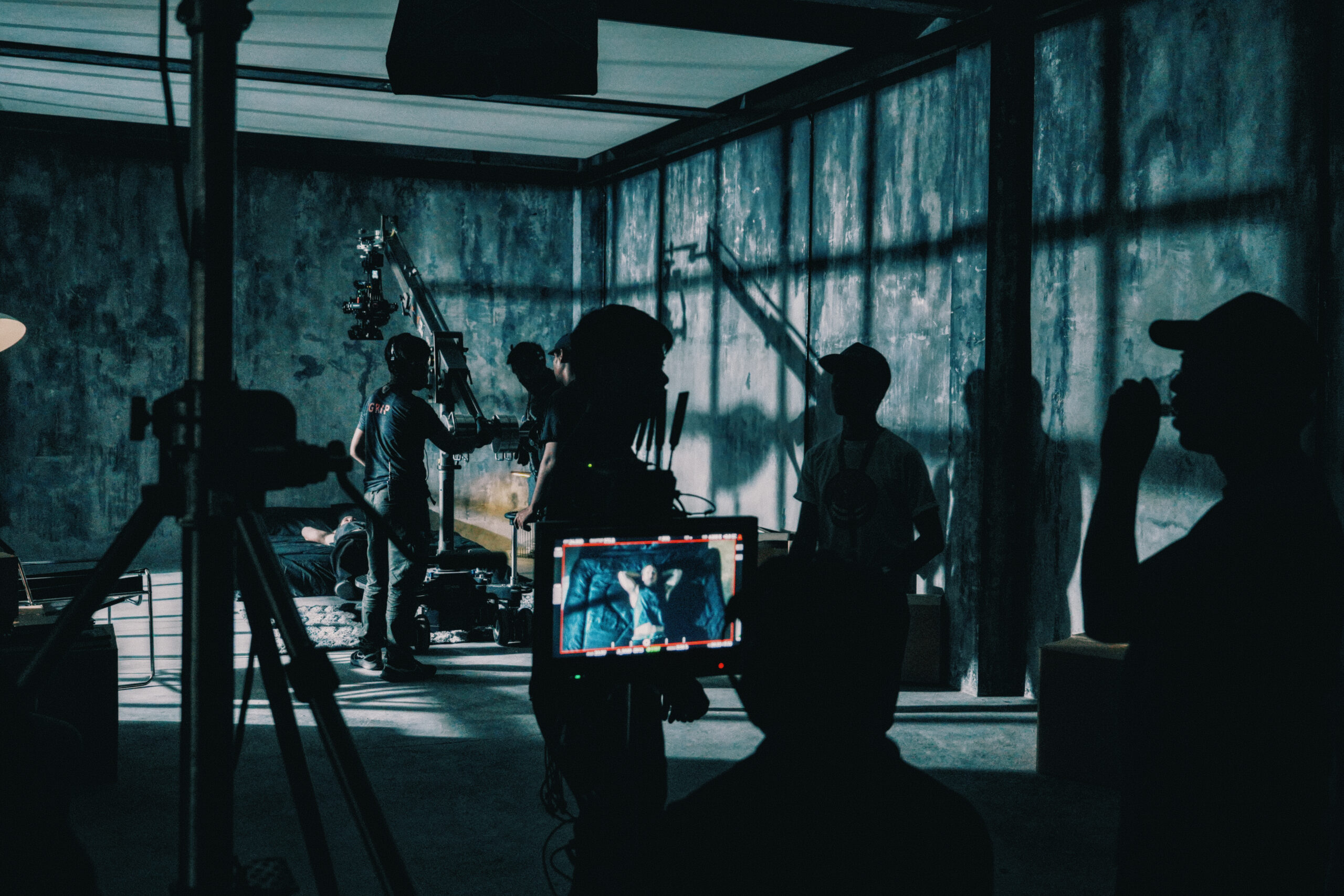
Most searches for creative office space Bangkok end in one of two places: a serviced floor with grey carpet and a printer nobody owns, or a shared hall where the noise always belongs to somebody else’s call. Begrüntes Haus is neither. It is a house — raw concrete, dark surfaces, considered light — where a small team can set its work down and leave it there overnight, with the model half-built on the table and the wall still covered in prints.
The Haus sits on the Sukhumvit Road stretch of Phra Khanong, a short walk from BTS Phra Khanong on the Sukhumvit Line, with dedicated on-site parking for up to eighty vehicles. Parking at that scale is rare on this road, and it changes how a working day begins: a team arrives with crates, samples, lighting cases or a client’s car, and nobody spends the first hour circling the block. The building holds roughly 150 considered guests at full capacity, which tells you the scale — intimate by design, run by the people who work in it.
What creative office space in Bangkok should actually give you
The phrase has been worn thin. In most listings, “creative” describes a colour on a feature wall and nothing about how the room behaves when there is real work in it. The teams who come to Begrüntes Haus tend to want three things that a conventional office floor cannot easily give them.
The first is permission to make a mess. Design studios, small agencies, product teams and independent producers work with physical things — samples, garments, prototypes, printed boards, mood walls, cases of gear. A carpeted floor with a facilities policy makes that awkward. Concrete does not. The Haus was built to take marks, and marks are part of the record.
The second is a room with a character worth sitting in. Light matters when you are looking at colour all day; ceiling height matters when you pin work to a wall and step back from it. The rooms here were considered as rooms first — proportion, surface, the way daylight falls across the day — rather than as square metres divided by a headcount.
The third is a term that matches the shape of the work. Creative work rarely runs on a three-year lease. It runs in campaigns, seasons, productions and pitches. Begrüntes Haus takes the working floor on daily, weekly, monthly and project terms, so the commitment ends when the project does. That is the whole premise of the Flexible Workspace line, and it is what separates it from a serviced office with a twelve-month minimum.
Who the working floor suits
- Production offices — a feature, commercial or series that needs a base for six weeks: a room for the ADs, wall space for the schedule, and somewhere to put the truck.
- Design and architecture studios — small practices that want a considered room rather than a partitioned floor, and who need to lay drawings out flat.
- Fashion and product teams — sampling, fitting and review cycles that run in seasons, with rails, boxes and a wall to pin the line up against.
- Agencies on a campaign — a strike team that needs to sit together away from the main office for the length of a pitch or a launch.
- Founders and independent studios — two to twelve people who have outgrown the café and do not want a shared hall.
- Visiting teams — regional or international crews who need a Bangkok base for a month, with parking and a station within walking distance.
- Editorial and post teams — quiet rooms for cut sessions, review days and client viewings, close to the floor where the material was shot.
Terms run from a single day to a full project. Tell us the shape of the work and the dates you are holding. Inquire and we will come back with what the floor can hold.
Creative office space Bangkok: what the Haus holds
Parking for up to eighty vehicles
This is the detail that ends most conversations early, in our favour. On Sukhumvit, a team of eight with two cars and a van is usually a logistics problem. Here it is not. Dedicated on-site parking for up to eighty vehicles means a client can drive in for a review, a courier can unload without a negotiation, and a production can stage a vehicle overnight. For any team moving physical work in and out on a weekly rhythm, it is the difference between a room that works and a room that costs you an hour a day.
BTS Phra Khanong, on foot
Staff and freelancers reach the Haus without a car. Phra Khanong sits on the Sukhumvit Line between Ekkamai and On Nut, which puts Thong Lo, Asok and Siam within a straightforward run, and it is a district that has quietly become one of the working addresses of the city’s design and film trade rather than one of its shopfronts. Bangkok’s designation as a UNESCO City of Design was earned in neighbourhoods like this one — the ones where the work is actually made.
Concrete, dark surfaces, considered light
The material palette is raw and deliberate: board-marked concrete, dark steel, grunge texture left where it fell. It photographs well, which matters more than it sounds — teams here shoot their own process constantly, and a room that looks like itself on camera saves a great deal of dressing. It also holds attention differently from a white box. People work more quietly in it.
A building that does more than one thing
The working floor is one of five lines under the same roof. That means a team taking creative office space in Bangkok at the Haus can hold a shoot day on the Media Studio floor, run the client dinner in the Event Space, and show the finished work in the Exhibitions programme — without moving the project across three addresses and three sets of terms. Most months, at least one tenant does exactly that.
Scale held on purpose
The Haus is intimate by design. It is not a tower floor and it does not pretend to be one; it will not suit a two-hundred-person department. What it does suit is a team small enough to know each other’s names and serious enough to want a room with a point of view. Curation is the product here, not a constraint we apologise for.
Terms: daily, weekly, monthly, project
A conventional Bangkok office is priced and papered for permanence. Begrüntes Haus is not in that business. The working floor is taken on four shapes of term, and the right one is usually obvious once you describe the job.
Daily. A workshop, an offsite, a casting day, a board review, a single day of concentrated work away from the main office.
Weekly. A pitch week, a sprint, a pre-production week before a shoot, a visiting team in town for a fixed run.
Monthly. The most common shape. A studio between leases, a founding team in its first year, a regional office testing the market, an editorial team through a season.
Project. The term follows the production. A film sets up its office for the length of the schedule and strikes when the schedule ends. A brand takes the floor from concept through launch. Nothing is signed for longer than the work lasts.
Every arrangement is quoted per inquiry, because the variables that matter — dates, headcount, access hours, whether you also need the shoot floor or the event room — differ enough that a published rate card would be fiction. Tell us the dates and the shape, and you get a real number back.
How to arrange creative office space Bangkok teams can actually work in
The process is short and human. Write to us with the dates you are holding, the size of the team, what you will be moving in and out, and whether the project also needs a shoot day or an evening. We will tell you honestly whether the Haus fits — and if it does not, we will usually say so rather than sell you a room that will frustrate you.
Then come and stand in it. Photographs of concrete all look the same; rooms do not. A walk-through takes twenty minutes and settles most questions about light, noise, access and where the cars go. If the fit is right, we confirm the term, the access arrangements and the start date, and the floor is yours from there.
Working on something with a defined start and end? Submit a proposal with the dates, the team size and what the room has to survive.
If you need a crew, not just a room
Begrüntes Haus rents space. That is the honest boundary of what we do here: the working floor, the shoot floor with its installed lighting and open shoot space, the event room, the gallery. We do not staff your production, and we would rather say so plainly than take a booking under a misunderstanding.
When a team needs crew — director, DOP, gaffer, photographer, producers, fixers, full production management — we refer to Overgrown Productions, the Bangkok full-service film and content company operated by the same team behind the Haus. It is a straightforward handover: the space stays a space, and the production is handled by people who do that work every week. Many projects use both, and the two conversations run in parallel rather than in sequence.
Related spaces at Begrüntes Haus
- Flexible Workspace — the working floor itself, on daily, weekly, monthly and project terms.
- Media Studio — turnkey rental with installed lighting and a raw, open shoot space; bring your own crew.
- Event Space — dinners, launches and pop-ups at a considered scale.
- Film Location — the building as a location for features, commercials and music videos.
- About the Haus — how the building came to be, and who runs it.
Creative office space Bangkok — frequently asked questions
What is the creative office space at Begrüntes Haus?
It is a working floor inside a concrete house on Sukhumvit in Phra Khanong, taken by small teams on daily, weekly, monthly or project terms. Raw concrete, dark surfaces and considered light, in a building that also holds a shoot floor, an event room and a gallery programme.
Where is Begrüntes Haus, and how do I get there?
On Sukhumvit Road in the Phra Khanong area of Bangkok, a short walk from BTS Phra Khanong on the Sukhumvit Line. Teams arriving by car use the on-site parking; teams arriving by train walk in from the station.
Is there parking?
Yes — dedicated on-site parking for up to eighty vehicles, which is unusual for this stretch of Sukhumvit. It suits teams moving equipment, samples or crates in and out regularly, and it means clients and visiting crew can drive in without a plan.
What terms are available? Do I have to sign a long lease?
No long leases. The working floor is taken daily, weekly, monthly or for the length of a project. The term is built around the work — a pitch week, a production schedule, a season — and ends when the work does.
What does it cost?
Every arrangement is quoted per inquiry. Dates, team size, access hours and whether you also need the shoot floor or the event room all change the answer, so we quote against a real brief rather than publish a rate card. Send the dates and you will get a real number back.
Is this a coworking space?
No. There is no shared hall, no hot-desk membership and no open floor sold by the seat. The Haus is a house, not a hall — a room a team takes for a term and works in on its own terms.
Can I shoot in the building while I am based here?
Yes, arranged separately. The Media Studio is a turnkey rental with installed lighting and a raw, open shoot space; there is no built cyclorama, so teams needing a seamless background bring their own backdrop or seamless paper. Many tenants book shoot days alongside their working term.
Do you provide crew, a photographer or full production?
Begrüntes Haus is venue and studio rental only — space, lighting and an open shoot floor; clients bring their own crew. When a project needs a photographer, a director, a full crew or fixers, we refer it to Overgrown Productions, the Bangkok full-service production company run by the same team.
Can I host a client dinner or a launch in the same building?
Yes. The Event Space handles dinners, launches and pop-ups at a considered scale — roughly 150 guests at capacity. Teams based on the working floor regularly use it for a launch or a review evening without moving the project to another address.
How do I arrange a visit?
Write to us with the dates you are holding, the size of the team and what the room has to survive, then come and stand in it. A walk-through takes about twenty minutes and settles most questions about light, noise, access and parking.
Visit the Haus
Bring the dates, the team size and the shape of the project. We will tell you honestly whether the room fits.