
A house on Sukhumvit for short runs — retail residencies, launches and things that exist for eleven days and then don’t.
A pop-up space Bangkok search usually ends in a mall atrium or a glass-fronted unit between a phone shop and a bubble tea counter. Both work, in the sense that a table and a rail will fit. Neither gives the idea anything to stand on. The temporary format is supposed to be the interesting one — the format where a brand can be strange for a fortnight — and it keeps getting housed in the least interesting rooms in the city.
Begrüntes Haus takes the opposite position. It is a concrete house in the Phra Khanong stretch of Sukhumvit: raw walls, dark surfaces, considered light, held at the scale of around 150 guests so an opening night reads as an event rather than a queue. It is a short walk from BTS Phra Khanong, and it has dedicated on-site parking for up to 80 vehicles — which on this road is close to unheard of, and which is what turns a build day from a logistics problem into an afternoon.
What a pop-up space in Bangkok is actually for
The temporary run does a job the permanent store cannot. It tests a market without a lease. It gives an online-only label a physical week. It lets a brand say something specific to a specific audience and then stop saying it, which is a discipline most permanent retail never learns. The whole value sits in the fact that it ends.
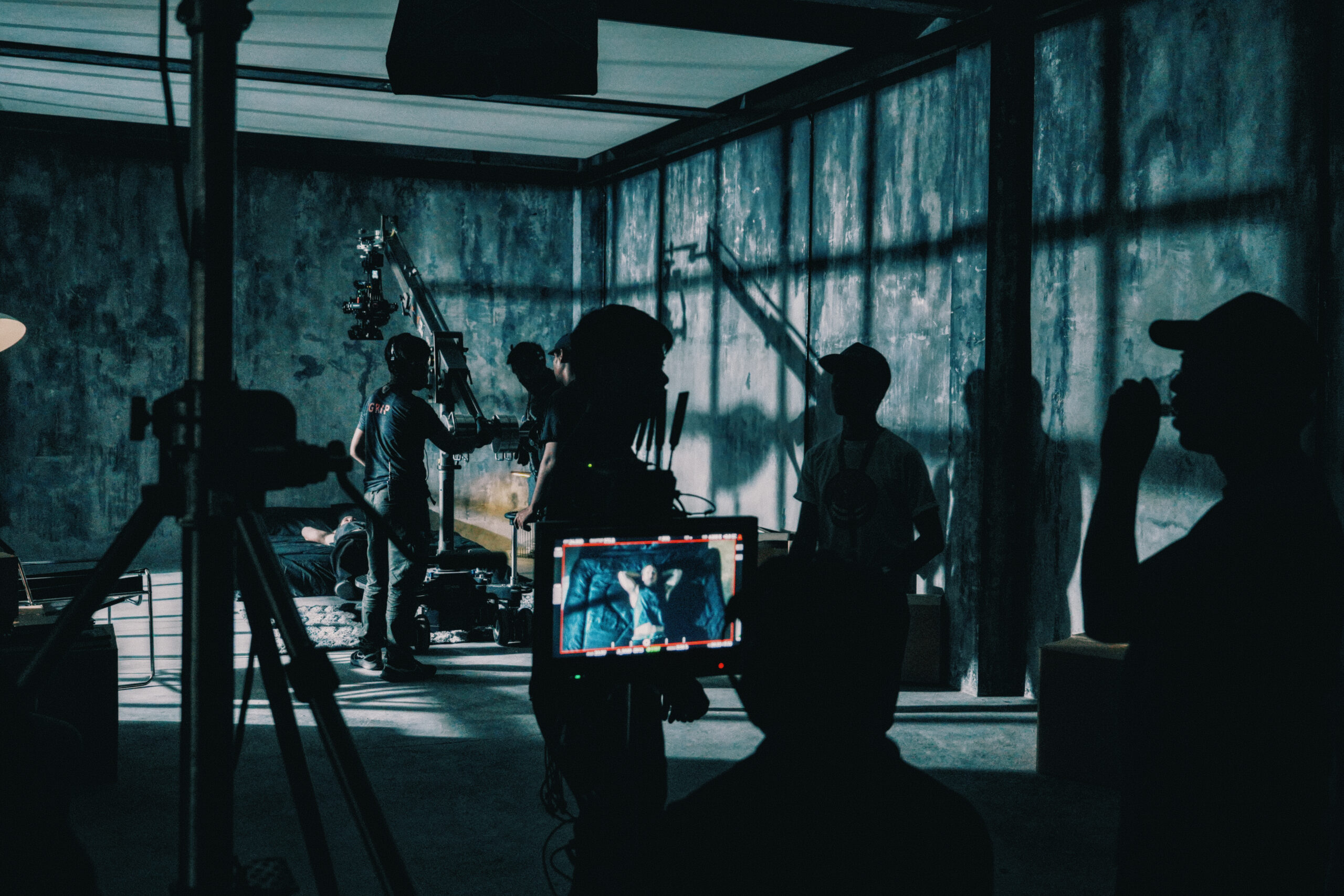
That argues for a room with character rather than a neutral box. A neutral box asks you to build the entire world inside it — fixtures, walls, lighting rig, the lot — on a budget sized for eleven days. A room that already has a position takes half that work off the table. Concrete floors, marked walls and controlled light do a great deal of the set-dressing before a single fixture is trucked in, and they photograph in a way that the audience will actually repost.
Begrüntes Haus is a multi-disciplinary creative studio and venue run by the team behind Overgrown Productions, a Bangkok film and content company. The building was fitted out by people who work in rooms for a living, and it shows in the unglamorous parts: where the vehicles go, how the power is reached, how quickly a build can come in and go out again. The five service lines — exhibitions, event space, film location, media studio and flexible workspace — all run out of the same house, which is why a short retail run can carry a launch night, a shoot and a press morning without moving address.
Details of the room as an event venue sit on the Event Space page.
Who a pop-up space here suits
- Independent fashion and jewellery labels — A physical week for a label that lives online the rest of the year — a rail, a run of pieces, and a room that makes them look considered rather than displayed.
- Beauty and fragrance launches — Dark, absorbent surfaces flatter product and skin, and the space is intimate enough for a sampling format that depends on someone actually talking to you.
- Publishers, record labels and print runs — Launch nights, listening sessions and signings, where the audience is meant to stay rather than pass through.
- Food and drink residencies — A chef’s short run, a spirit brand’s tasting week, a coffee roaster taking a room for a season rather than signing for three years.
- Design and furniture studios — Objects shown against concrete instead of showroom white, in a space that reads as a studio rather than a shop floor.
- Brands testing a Bangkok audience — An overseas label running a market test without committing to a lease, staffed for a week and struck on Sunday night.
- Collectives and multi-brand takeovers — Several labels sharing a run, which needs a room with enough separation to keep each of them legible.
Short runs get planned late and booked early — the dates that matter tend to go first. Inquire with your window and the shape of the build, and a walkthrough usually follows within the week.
What the house gives a short run
Parking for up to 80 vehicles
Dedicated on-site parking for up to 80 vehicles is the difference between a build day and a bad day. Fixtures, rails, crates and lighting arrive by vehicle and go straight in, and on opening night the people who drive can actually get to you. On this stretch of Sukhumvit, where most temporary retail depends on a shared mall dock and a queue for the service lift, that is the single most practical advantage in the building.
BTS Phra Khanong on foot
The Haus is a short walk from BTS Phra Khanong on the Sukhumvit line, which puts Thong Lor, Ekkamai, Asok and the far side of the river within a journey people will actually commit to on a weeknight. For a run measured in days rather than months, footfall is not something you build slowly — it is something the location either gives you or doesn’t. Route details are on the BTS Skytrain site.
Concrete that does half the work
Raw floors and walls, dark textures, nothing softened for a brochure. A short run cannot afford to build a world from scratch, and here it doesn’t have to. The room already has a position; a good build works with it rather than papering over it.
Light you can work with
Light is treated as part of the architecture — controlled daylight against absorbent surfaces, rather than a flat overhead wash. That gives product something to sit in, and gives whoever is shooting content for the run something to work against. The adjoining media production space carries installed lighting and an open shoot floor for teams who want to shoot the run while it is up.
Rooms that carry the whole week
A pop-up is rarely only a shop. There is a build, a press morning, an opening, a couple of quiet trading days, a talk or a dinner, and a strike. The house is arranged so those all happen in sequence at one address, without a second venue booking in the middle of the week.
How to arrange a pop-up space in Bangkok
Start with a paragraph rather than a form. What the run is, roughly how many days you want, the window you are aiming at, and what has to come into the building — a rail of stock, a bar, a large build, a vehicle. That is enough to say yes, no, or not those dates.
Then walk the room. Concrete does not photograph the way it reads, and a build plan drawn from images tends to miss where the light lands at the hour you open. At the walkthrough the practical questions get settled: where fixtures can go and how they attach, power and cabling for anything technical, the build and strike schedule, and how people move from the parking through to the first thing you want them to see.
Durations are deliberately flexible — a day, a week, or a longer residency where build, run and strike all sit inside one arrangement. Pricing is quoted per project once the dates, the duration and the shape of the build are known, so nothing is published as a fixed rate. If you are budgeting against the wider market, Thailand’s Creative Economy Agency is a useful read on how the temporary-format sector here is moving.
If the run is already designed and you know the week you want, skip the preamble. Submit a proposal with the concept, the build requirements and your dates, and you will get a plain answer on whether the room fits it.
If you need a crew, not just a room
Begrüntes Haus rents space. That is the honest boundary: the rooms, the surfaces, the light, the parking, the open shoot floor and the installed lighting in the media studio. It does not supply a production crew.
If the run needs a photographer for the opening, a film team to cut a campaign piece, a director, or producers and fixers to run a shoot around the build, that work goes to Overgrown Productions — the full-service Bangkok film and content company operated by the same team. Mention it when you inquire and the two sides get coordinated for you, rather than a venue improvising a camera department.
Related spaces at Begrüntes Haus
- Event Space — dinners, launches and pop-ups, including the nights that attach themselves to a short run.
- Exhibitions — the open call and venue-rental routes, for runs that are closer to a show than a shop.
- Media Studio — installed lighting and an open shoot space for shooting the run while it is up; teams bring their own crew.
- Film Location — the same concrete rooms taken as a location for commercials, features and music videos.
- Flexible Workspace — daily, weekly or project-length work space for the team running the pop-up.
- Product launch venue in Bangkok — the launch-night version of the same argument.
Pop-up space Bangkok — frequently asked questions
What kind of pop-up suits Begrüntes Haus?
Runs that gain from character rather than neutrality: independent fashion and jewellery, beauty and fragrance, design objects, record and book launches, food and drink residencies, and multi-brand takeovers. If the concept depends on a bright white shopfront and passing mall footfall, a mall unit will serve it better, and we will say so early.
How many days can we take the space for?
A day, a week, or a longer residency covering build, run and strike inside one arrangement. Short runs and month-long residencies are both workable. Tell us the window you are aiming at and the duration is shaped around the project rather than sold as a fixed package.
How many people fit at an opening night?
The house is built for around 150 considered guests. That is a deliberate scale: enough for a real opening with press and an audience that stays, and contained enough that the room stays legible and people actually look at what you have put in it.
Is there parking for customers and for the build?
Yes — dedicated on-site parking for up to 80 vehicles, which is rare for this stretch of Sukhumvit. It carries both halves of a short run: guests arriving on opening night, and the vans, rails and crates arriving for build and strike without competing for a shared loading dock.
How do people get there without driving?
The Haus is a short walk from BTS Phra Khanong on the Sukhumvit line, which makes it a simple journey from Thong Lor, Ekkamai, Asok, Siam and across the river. For a run measured in days, a station within walking distance is a direct contributor to footfall.
Can we attach fixtures, rails and signage to the walls?
Fixing methods are agreed project by project at the walkthrough, based on what you are mounting, how heavy it is and which surface it is going on. Bring the build plan to that conversation. Freestanding fixtures, rails and suspended solutions are all workable, and settling the method in advance keeps build day calm.
Can we run food and drink at the pop-up?
Food and drink formats are common here and are discussed as part of the project, including how catering or a bar arrives and where it sets up. Bring the requirement to the walkthrough so the flow from parking to service is planned rather than improvised.
Can we shoot content in the space during the run?
Yes, and many teams do. The building works as a location in its own right, and the adjoining media studio carries installed lighting and an open shoot floor. Note there is no built cyclorama or cyc wall — teams needing a seamless background bring their own backdrop or seamless paper.
Do you provide staff, a photographer or a production crew?
Begrüntes Haus is venue and studio rental — the space, the surfaces, the light and the shoot floor. It does not supply production crew. For a photographer, a film team, a director, producers or fixers, work is referred to Overgrown Productions, the full-service Bangkok film and content company run by the same team. Mention it when you inquire and both sides are coordinated for you.
What does a pop-up space cost, and how do we start?
Pricing is quoted per project once the dates, the duration and the shape of the build are known, so no fixed rates are published — every run asks for something different. Start by sending the concept, your dates and what has to come into the building through the contact page, and a walkthrough usually follows within the week.
Visit the Haus
Concrete reads differently in person. Walk the room, work out where the build wants to go, and take the week while it is open.