
A concrete house in Phra Khanong for shows that want a wall with a history, not a white cube.
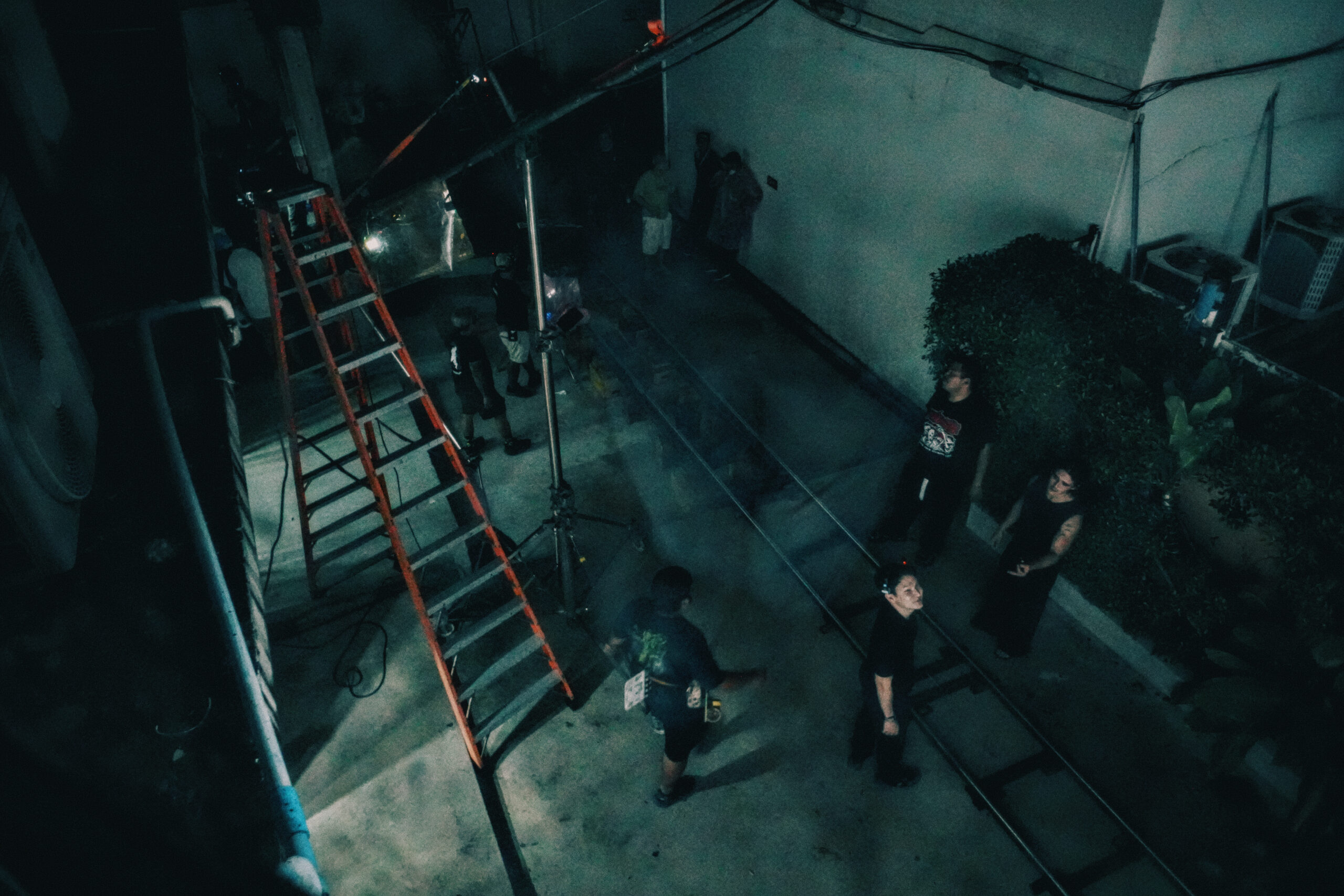
Most rooms offered as an exhibition space Bangkok are rooms that do something else for the rest of the year. A hotel function suite with the chairs taken out. A restaurant that clears its tables. A retail unit between tenants. Work hung in those rooms is always slightly apologising for the walls behind it. Begrüntes Haus is a raw concrete house in the Phra Khanong area, and it was set up for shows rather than adapted for them.
The house is on Sukhumvit Road, walkable from BTS Phra Khanong, with dedicated on-site parking for up to eighty vehicles. For an exhibition those two facts govern both ends of the project: crates and fabricators arrive during install without a shuttle from a public garage, and an opening night audience can reach the door without deciding whether the journey is worth it.
What an exhibition space Bangkok show looks like here
Begrüntes Haus is a creative studio and venue brand operated by the team behind Overgrown Productions. Exhibitions run through two routes: an open call, and venue rental with co-production for projects that need more than a room. Artists, curators, galleries and brands all use it, and the arrangement is agreed per project rather than sold as a package.
What the building offers a show is a wall that has already lived. Concrete carries mark, grain and shadow, and considered light moves across it through the day. Work hung against that reads differently to work hung on plasterboard — it sits in an environment rather than floating in a neutral field. For some practices that is precisely wrong, and those shows belong in a white cube. For a great deal of contemporary work, sculpture, photography and installation especially, the building is an argument in the show’s favour.
The house is intimate by design, holding around 150 considered guests at an opening. Framed properly that is a strength: a room that is visibly full carries more energy on an opening night, and a guest list of the right people does more for a show than a larger crowd of the wrong ones.
Who the house suits
- Artists and collectives — solo and group shows, including work made in response to the building.
- Independent curators — projects that need a venue partner rather than a landlord.
- Galleries running off-site projects — a second space for a show that will not sit in the main room.
- Brands with cultural programming — exhibitions and commissions that need credibility rather than signage.
- Photographers and image-makers — print shows in a space with texture and controllable light.
- Design and craft presentations — objects shown in a room with weight to it.
Shows are agreed per project, through the open call or as a venue booking with co-production. Submit a proposal with your concept, dates and install requirements.
What the building gives a show
Concrete, and what it does to work
The defining surface is concrete — walls, columns and floor holding mark and grain rather than paint. Hanging and mounting solutions are agreed per show rather than assumed, because a concrete structure has its own rules and the answer depends on the weight, the method and where a piece needs to sit. That conversation happens at proposal stage, which is considerably better than discovering a constraint on install day.
Light, and the hours of the day
Considered natural light moves through the building, and installed lighting in the Media Studio area supports work that needs it. For a show this means the space is not a fixed condition: a piece reads differently at three in the afternoon and at eight in the evening, and curators who plan for that get something a windowless gallery cannot give them. Additional lighting for specific works is brought in or discussed as part of the install.
Install, derig and the shape of a run
Install and derig days are agreed alongside the exhibition dates rather than treated as an afterthought. Access routes, crate handling, fabricator arrival, power and where packing materials live for the duration are settled at proposal and confirmed on the site visit. Because the team works in production, the schedule is discussed in terms of what actually has to happen rather than in venue-booking abstractions.
Parking for eighty vehicles
Dedicated on-site parking for up to eighty vehicles matters more to an exhibition than to almost any other kind of booking. Work arrives in vehicles, often fragile, often at awkward hours, and often more than once. Being able to unload beside the room rather than carrying a crate across a public car park is a practical protection for the work itself, and it is rare on this stretch of Sukhumvit.
Openings, and getting an audience to turn up
The house is walkable from BTS Phra Khanong on the Sukhumvit Line, with route detail published by BTS Skytrain. Opening night attendance in Bangkok is decided largely by how difficult the journey looks on the invitation. A station within walking distance measurably improves turnout compared with a venue reachable only by car in evening traffic — and for a show, the opening is the moment the audience either arrives or does not.
Documentation in the same building
A show outlives its run through its documentation. Because the same building operates as a Media Studio and a film location, installation photography, artist portraits or a short film about the work can be planned into the same period rather than arranged elsewhere afterwards. The documentation then looks like the show, because it was made in the same concrete.
How to propose an exhibition space Bangkok project
Send the concept, the proposed dates, the number and nature of works, install and derig requirements and anything unusual about weight, power or mounting. Proposals come through the open call or as a direct venue inquiry with co-production discussed where the project needs it. A response confirms availability and arranges a site visit, which for an exhibition is not optional in any real sense — the work has to be imagined in the actual room.
Rates and terms are quoted per project rather than published, because a four-day photographic show and a three-week installation with a build are not comparable, and co-production changes the arrangement again. Permits, insurance for the work, and the conduct of fabricators and contractors sit with the exhibiting party; background on the Thai events and exhibitions landscape is published by the Thailand Convention and Exhibition Bureau.
The building is easier to propose into once you have stood in it. Inquire to arrange a visit before finalising a concept.
What the building is not
It is worth being direct, because a mismatched show helps nobody. This is not a white cube, not a hotel function room, and not a commercial gallery offering representation or sales infrastructure. It is a concrete house that gives a show a strong environment and a considered audience, and asks the work to hold its own against a building with character.
Practices that need neutral walls, museum-standard climate control or a gallery’s sales operation should look elsewhere, and will be told so honestly rather than after a commitment. Practices that want their work seen somewhere with weight, in front of the right 150 people, are in the right place.
If you need a crew, not just a room
Begrüntes Haus provides the space, the installed lighting and the open floor. It does not supply crew. Artists, curators and brands needing a photographer, a film crew, a director, fixers or full-service production for documentation or an accompanying campaign are referred to Overgrown Productions, the Bangkok production company behind the house. The two are booked separately — one is a building, the other is a team.
Related spaces at Begrüntes Haus
- Exhibitions — the open call, venue rental and co-production in full.
- Event Space — openings, dinners and public programme events.
- Media Studio — installed lighting and an open shoot space for documentation.
- Film Location — the building as a location for film about the work.
- Flexible Workspace — a base for the run of a project.
- Exhibition space rental in Bangkok — the rental terms in more detail.
- Art venue in Phra Khanong — the location and the neighbourhood.
- Gallery space rental in Bangkok — hanging shows in the house.
Exhibition space Bangkok — frequently asked questions
How do artists and curators apply to exhibit?
Through the open call, or as a direct venue inquiry where a project needs co-production alongside the space. Send the concept, proposed dates, the number and nature of the works and any install requirements. Proposals are assessed per project rather than against a fixed programme slot.
What does the exhibition space cost?
Terms are quoted per project rather than published. A four-day photographic show and a three-week installation with a build are not comparable, and co-production changes the arrangement again. Send the concept and dates and a response follows with terms appropriate to the project.
How many people does an opening hold?
Around 150 considered guests. The house is intimate by design, which suits an opening where a visibly full room carries the energy of the evening. It is not a venue for large-format public exhibitions with continuous high footfall.
Can we hang or mount work on the concrete walls?
Mounting and hanging solutions are agreed per show rather than assumed, because a concrete structure has its own constraints and the answer depends on weight, method and placement. This is discussed at proposal stage and confirmed on the site visit, well before install day.
Is there parking for delivering artwork?
Yes. Dedicated on-site parking for up to eighty vehicles means work can be unloaded beside the room rather than carried across a public car park, which is a practical protection for fragile pieces. It also covers fabricators and contractors during install and derig.
How does an audience reach the venue?
The house is in the Phra Khanong area of Sukhumvit Road, within walking distance of BTS Phra Khanong on the Sukhumvit Line. Opening night attendance in Bangkok depends heavily on how difficult the journey looks, so a walkable station measurably improves turnout.
Are install and derig days included?
Install and derig are discussed alongside the exhibition dates rather than treated as an afterthought. Access, crate handling, fabricator arrival, power and storage of packing materials for the run are agreed at proposal stage and confirmed on the site visit.
What kind of lighting does the space have?
Considered natural light moves through the building, and installed lighting in the Media Studio area supports work that needs it. Additional lighting for specific works is brought in or discussed as part of the install. Note that there is no built cyclorama or cyc wall in the house.
Can we document the exhibition in the same building?
Yes. The same building operates as a Media Studio and a film location, so installation photography, artist portraits or a short film about the work can be planned into the same period. Documentation made in the same concrete looks like the show rather than like a separate exercise.
Do you provide a photographer or production crew for documentation?
No. Begrüntes Haus provides the space, the installed lighting and the open floor. Artists, curators and brands needing a photographer, a film crew, a director, fixers or full-service production are referred to Overgrown Productions, the Bangkok production company that operates the house. The two are booked separately.
Visit the Haus
Bring the concept, the dates and the works. The building will tell you whether it is the right room.